Table of Contents
Thomas Pennant (1726-1798)

The famous early travel writer met Bernard Barton of Carlisle (1728-1773) and wrote about his spinning wheel in his "A Tour in Scotland and Voyage to the Hebrides, 1772, volume 1" (1774) p68:
"May. 28 [1772]. Saw at Mr Bernard Burton's, a pleasing sight of twelve little industrious girls spinning at once at a horizontal wheel, which set twelve bobbins in motion; yet so contrived that should any accident happen to one, the motion of that might be stopped without any impediment to the others."
Rev. Dr. Joseph Priestley (1733-1804)
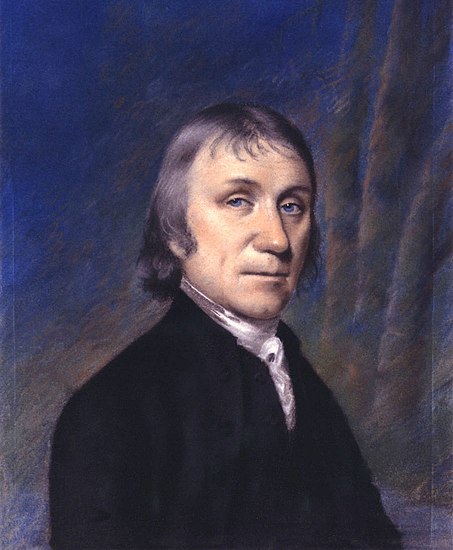
Now famous for discovering oxygen, Priestley was also a prominent religious non-conformist. John Barton the Elder (1754-1789) met with Priestley in April 1787. He then wrote to Priestley in June to enlist his support for the anti-slavery cause (see John Barton to Dr. Joseph Priestley, June 1787).
Priestley wrote a reply "in which he tells me that he is now preparing for the press a set of Lectures w’ch he delivered at Warrington some years ago on History & General Policy. In them, he says, he has an article on the Slave Trade, in which he expresses himself pretty strongly. - He is pleased to add that he has particularly acknowledged the obligations "that human nature is under to our people, who have distinguished themselves so much on this occasion. If (says he) Africa be emancipated from their present cruel bondage they will owe it to the Quakers." This is more than common candour as the world now goes." (see John Barton to William Roscoe, July 1787, R.C.246).
The next year Priestley published a 40 page pamphlet entitled A Sermon on the Subject of the Slave Trade (1788), which is online here. Its opening paragraph reads: "I Publish this discourse not only in compliance with the request of a society of christians whom I think myself happy in every opportunity of obliging, but also because I thought that some of the arguments on which I have insisted had not been sufficiently urged by other writers on the same subject, and at the same time to evince my readiness to join with christians of all denominations in what appears to me to be right and just."
Rev. William Paley (1743-1805)
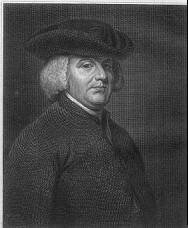
Now best known for his famous creationist 'watchmaker analogy'. Paley was the Vicar of Dalston (in the parish of which lies Ivegill) from 1780-1782 and then Archdeacon of Carlisle. He evidently knew John Barton the Elder (1754-1789) who lived in Carlisle (and whose father was from Ivegill).
In a letter dated November 1787, John writes "I have not seen the English Review & shall not not till my return to town. The conductor of that publication seems to have a more than common share of malevolence abo’t him, & not infrequently attempts to damn what all the other reviewers agree in praising. I remember my friend Paley was one of those whose labours he attempted to depreciate, but to as little purpose as he now, I trust attempts to undervalue the author of the Wrongs."
In a later letter dated January 1788 he writes "I am going to write to Archdeacon Paley to urge him to promote a petition to Parliament from Carlisle, w’ch hope will be obtained."
The Fair Minute Book of the London Committee for the Abolition of the Slave Trade 1787-1788 records that he did so: "January 29 [1788]: Nine members present; JB absent. Newton's Thoughts on the Africa Trade' to be printed. John Barton communicated a letter from Arch-Deacon Paley."
John's eldest daughter Maria Hack (1777-1844) was openly influenced by Paley's creationist arguments in her work "Harry Beaufoy; or the Pupil of Nature", and acknowledges him in her introduction. Of course this was nearly 40 years before 'On the Origin of Species' was published.
William Roscoe (1753-1831)

When he was ~19, Roscoe attempted to woo Maria Done (1752-1784) but she saw him more as a friend, as her correspondence makes clear. A few years later, Maria married John Barton the Elder (1754-1789), who became good friends with Roscoe until Barton's premature death, and much of their correspondence survives. Roscoe became a lawyer but continued to write poetry. His anti-slavery piece 'The Wrongs of Africa' was proof-read by Barton and published by Barton's brother-in-law Robert Faulder. His best known poetical work was probably 'The Butterfly's Ball and the Grasshopper's Feast (1802)'. Roscoe later became better known for his historical writings, such as 'The Life of Lorenzo De' Medici, Called the Magnificent (1796)', and 'The Life and Pontificate of Leo the Tenth (1805)'.
A new biography of Roscoe, "The Roscoes of Liverpool" has been published online by Kevin Littlewood, who found use for the letters on this site and as a consequence gives rather more credit to the Barton-Roscoe friendship than previous biographers have. It is available for purchase as an e-Book (PDF) from http://roscoesofliverpool.blogspot.com/ and is highly recommended.
James Stephen (1758-1832) and Sir James Stephen (1789-1859)

James Stephen (above) was a lawyer, prominent abolitionist, and later an MP. His second marriage was to Sarah, sister of William Wilberforce (see below). He was a friend of John Dougan (1765-1826), and godfather to his daughters Mary Stephen Dougan (1804-1881) and Emily Dougan (1806-1877). A sweet letter written by an elderly James to Mary in 1831 is reproduced here.
His son Sir James Stephen (1789-1859) was British under-secretary of state for the colonies. In 1832 he was an executor of the will of Charles Elliott the cabinet-maker (1752-1832). He married Jane Catherine Venn, niece of Charles' second wife Eling Venn (1758-1843). Jane was the aunt of the mathematician John Venn (creator of Venn diagrams), and Sir James and Jane were grandparents of Virginia Woolf.
After the death of John Dougan (1765-1826), Sir James became the guardian of John's daughter Emily Dougan (1806-1877) and gave her away in marriage to Rev. Charles Boileau Elliott (1803-1875). Both Stephens are mentioned in a biography of their grandson/son James Fitzjames Stephen.
Charles Simeon (1759-1836)
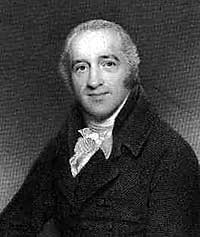
The famous evangelist was a friend of the Elliotts, in particular Mary Sophia Elliott (1790-1843), according to the *Memoirs of Emily Elliott. He performed the marriage of Rev. Charles Boileau Elliott (1803-1875) and Emily Dougan (1806-1877), in 1831 at Holy Trinity Church, Marylebone Road, London (which was then only 3 years old).
William Wilberforce (1759-1833)
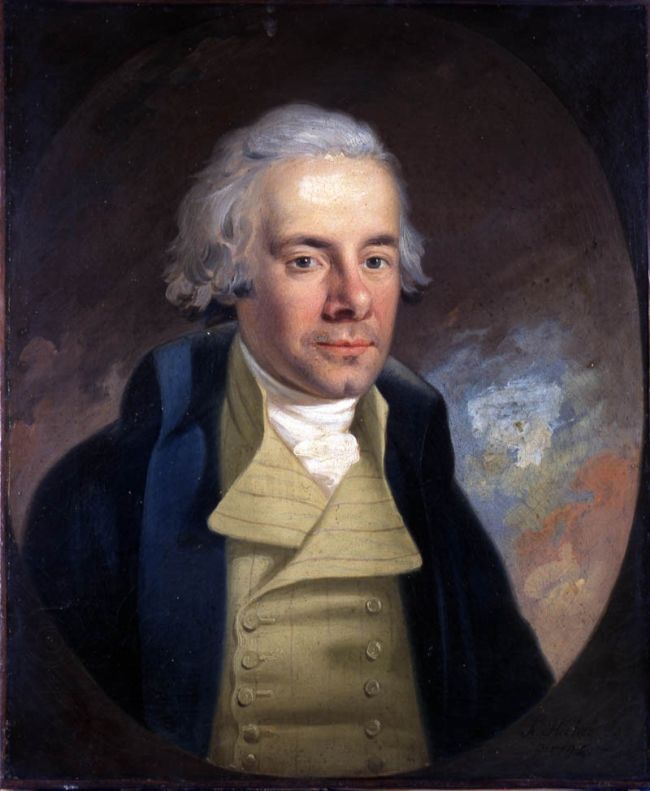
Politician, leading abolitionist, and a key ally of the Society for Effecting the Abolition of the Slave Trade , of which John Barton the Elder (1754-1789) was a founding member. Mary Sophia Elliott (1790-1843) was his secretary. His sister Sarah married James Stephen (1758-1832). Wilberforce's life and struggles against slavery were dramatized in the 2006 film 'Amazing Grace'.
See also *Slave Trade Minutes 1787-1788.
Thomas Clarkson (1760-1846)

Leading abolitionist, and one of the founders of the Society for Effecting the Abolition of the Slave Trade along with John Barton the Elder (1754-1789). John wasn't always confident of Clarkson however, once writing of the younger man:
"Clarkson is still at Bristol, & has been ill there; which is not to be wondered at, for he has exerted himself beyond the strength of any ordinary mortal. His zeal and activity are wonderful, but I am really afraid he will at times be deficient in caution and prudence, and lay himself open to imposition as well as incur much expence; perhaps sometimes unnecessarily. I wo'd not however have this go further than ourselves, & I am sure it will not." (John Barton to William Roscoe, August 1787, R.C.247).
See also *Slave Trade Minutes 1787-1788.
Emperor Akbar Shah II (1760-1837)
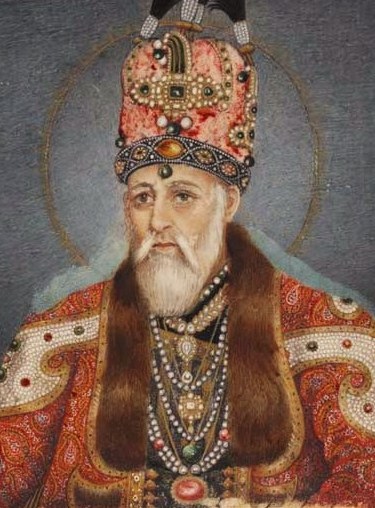
The second-to-last Mughal Emperor of India, he was essentially a puppet of the East India Company, and their agent in his court was Charles Elliott (1776-1856). In his grand-daughter's memoirs (p4), she writes that Shah was a "state prisoner of Government and never moved out without my Grandfather, and a guard of 300 mounted men. This great man was so grateful to my Grandfather for getting his pension raised from £20,000 to £25,000 per annum, and finding it impossible to get this honorable Englishman to accept any pecuniary compensation for doing what he considered a mere act of justice, he induced my Grandfather to allow the little form of adopting my dear Grandmother as one of his 'daughters'! - whereupon his real daughter placed on her finger a ring containing a single emerald, the largest I have ever seen except among Royal jewels. She gave this ring to my Father - and all my life, as long as he lived we knew it, & its story, on his finger."
A lengthier account describing Elliott's work in the court is given in *Hudson 1999.
The Macaulays

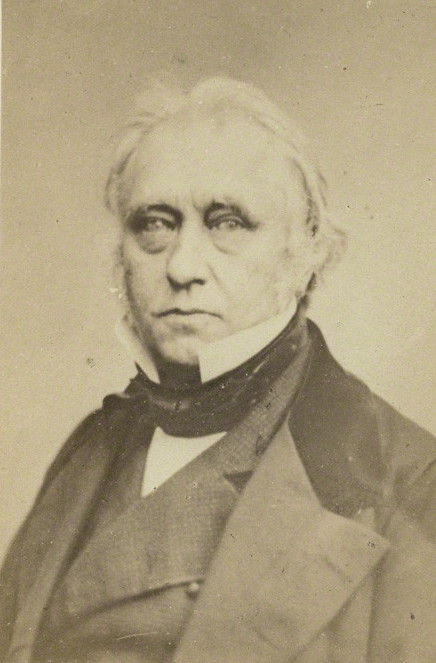
According to Emily Elliot's memoirs, the Macaulay family were friends of Charles Elliott the cabinet-maker (1752-1832). Zachary Macaulay (1768-1838; ABOVE LEFT), a prominent abolitionist, was also a good friend of John Dougan (1765-1826) (Emily Elliott's maternal grandfather).
His son Baron Thomas Babington Macaulay (1800-1859; ABOVE RIGHT) was the author of many works. His poem "Horatius" featured prominently in the 2013 Tom Cruise sci-fi film Oblivion. His Essay on Lord Clive (online here) is (mis?)quoted in Emily's memoir p5, and his Critical, historical and miscellaneous essays, Volume 6 (1860) contains an essay (online here, p360), originally published in the Edinburgh Review #90 in 1827, defending the late John Dougan (1765-1826) in his dispute with Thomas Moody about slavery in the West Indies.
Charles Lamb (1775-1834)

A well-known writer in his day, and a close friend of Bernard Barton the Quaker poet (1784-1849).
Lord Byron (1788-1824)
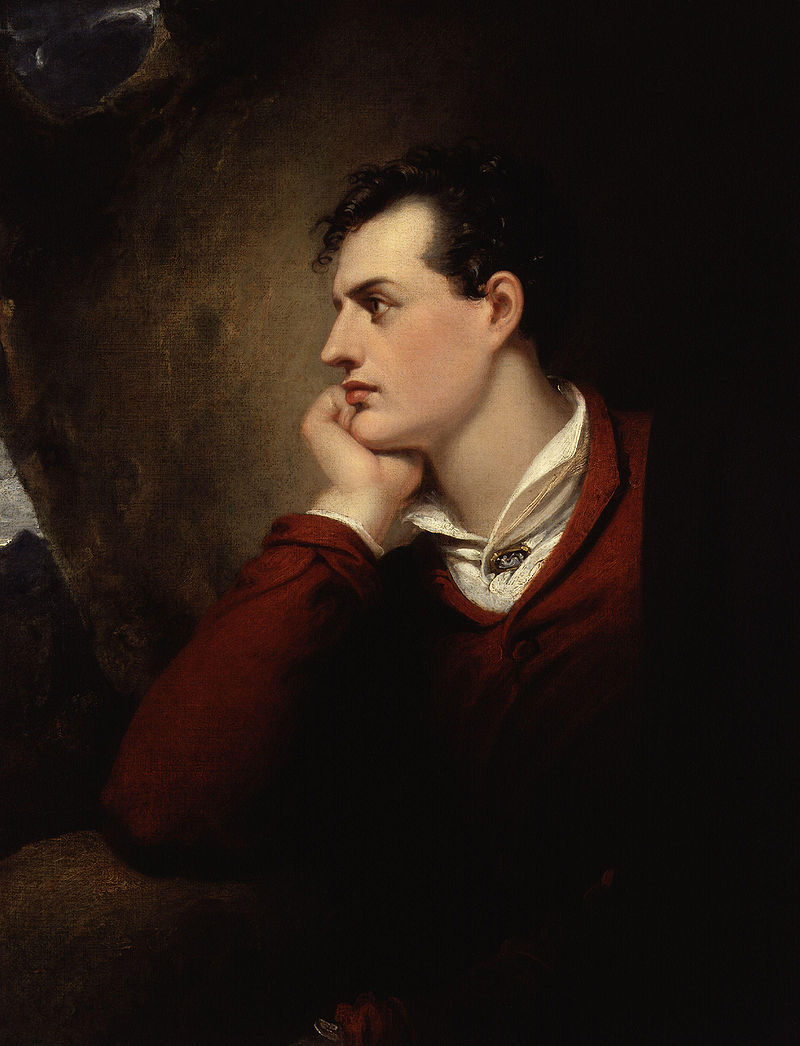
The famous "mad, bad and dangerous to know" poet sent a letter in 1812 to Bernard Barton the Quaker poet (1784-1849), praising his work: "I think more highly of your poetical talents than it would perhaps gratify you to hear expressed, for I believe from what I observe of your mind that you are above flattery" while also urging him not to give up the day job: "do not renounce writing, but never trust entirely to Authorship" (*Byron letters pp178-179).
Louis-Napoléon Bonaparte (1808-1873)

Nephew of Napoléon Bonaparte. In 1848 he became Emperor Napoléon III. In ~1835/6, while exiled, he shared a room and had breakfast with Rev. Charles Boileau Elliott (1803-1875) and Emily Dougan (1806-1877) in a Spanish inn, as recounted in the memoirs of Emily Elliott (p10):
"It was at this time our parents travelled in Spain and Portugal. One curious little incident my Father used to tell of this time, in addition to scenes of Bullfights, Tournaments etc. Putting up their carriage at a country inn for the night, the Innkeeper apologized for limited room - and said there was but a wooden partition between the bedroom he could offer them, and that of a single gentleman who was in the other part of the room - 'but he was a very quiet gentleman'. To such good travellers this mattered not - and next morning their quiet friend and they breakfasted together, and had a little conversation on travelling in Spain, politics etc. When this young man, then about 20, left the room the Innkeeper said confidentially to my Father 'Who do you think that is, Segnor? Prince Louis Napoleon! now exiled from his country'. It was little thought at that time that he would ever be Emperor of France."
Edward Fitzgerald (1809-1883)

A close friend of Bernard Barton the Quaker poet (1784-1849). After Bernard's death Fitzgerald wrote a 'memoir' about him (see *Fitzgerald 1849 and also *Barton 1850), and then married Bernard's daughter Lucy Barton (1808-1903), apparently an act of guardianship more than love. Fitzgerald later became famous for his poetry, in particular his English versions of The Rubaiyat of Omar Khayyam, from which the following quite famous lines are taken:
"The Moving Finger writes: and, having writ,
Moves on: nor all thy Piety nor Wit
Shall lure it back to cancel half a Line,
Nor all thy Tears wash out a Word of it." (v71)
"Ah Love! could thou and I with Him conspire
To grasp this sorry Scheme of Things entire,
Would not we shatter it to bits--and then
Re-mould it nearer to the Heart's Desire!" (v99)
The Keans: Charles Kean (1811-1868) and Ellen Tree (1805-1880)


Shakespearean actors and friends of Mary Sophia Elliott (1790-1843) and her relatives, according to the *Memoirs of Emily Elliott p2.
Karl Marx (1818-1883)
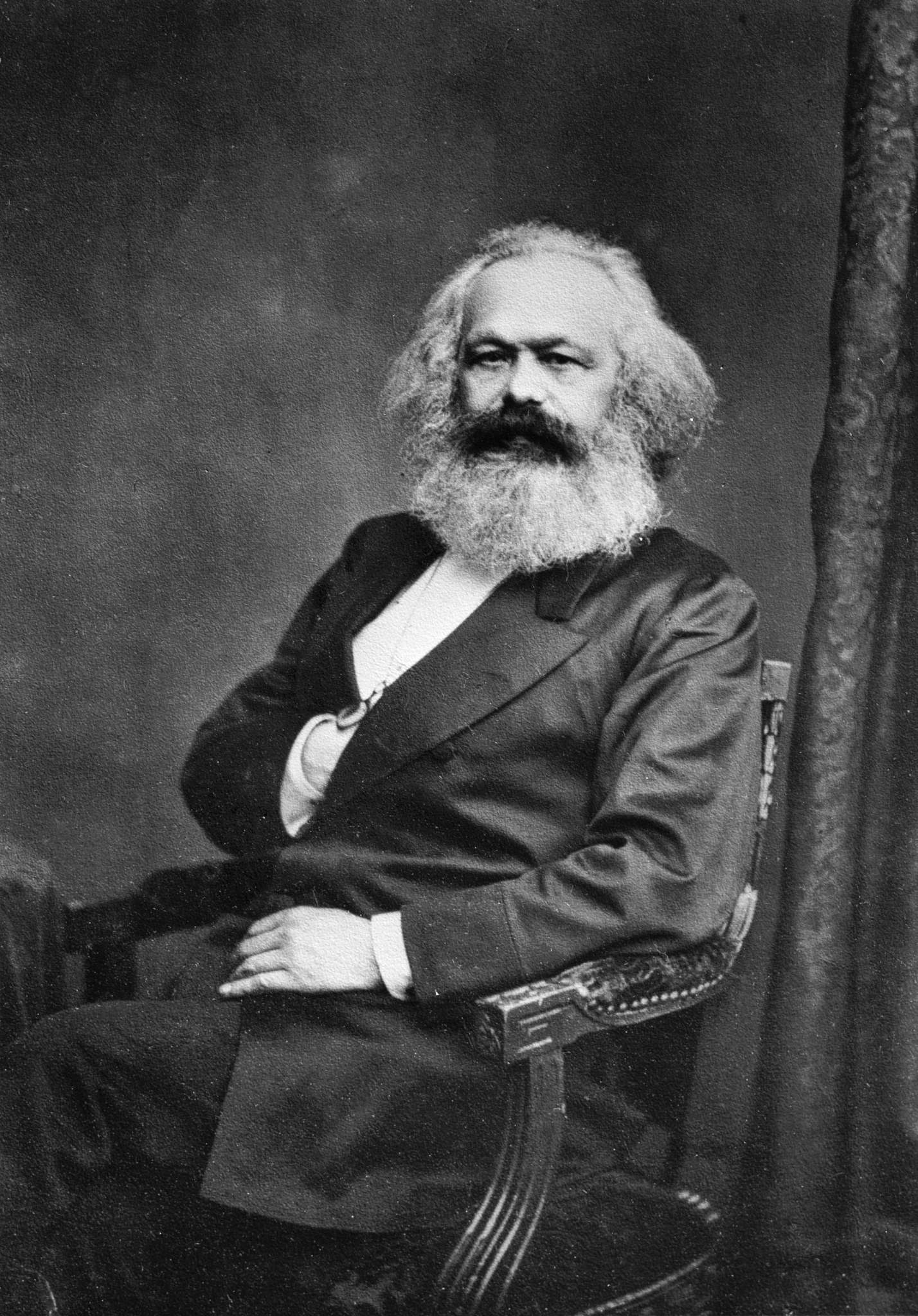
Marx discussed the economic works of John Barton Senior (1789-1852) in his Theories of Surplus Value (1861-3), which is sometimes regarded as Volume IV of Das Kapital.
He describes the economic works of David Ricardo (1772-1823) as "hair-raising nonsense" and continues: "as he says himself, he received the impetus for it from Barton’s work, which must therefore be examined." However he is much kinder towards Barton's work, saying: "Mr. Barton, in the above publication, has, I think, taken a correct view of some of the effects of an increasing amount of fixed capital on the condition of the labouring classes. His Essay contains much valuable information" and "indisputably, Barton has very great merit", though he does go on to point out "Barton’s error or deficiency" as he sees it.
Edward VII (1841-1910)

Christened 'Albert Edward', he was the son and heir of Queen Victoria. He was baptised from a bottle of water taken from the River Jordan and presented to the Queen for that purpose by Rev. Charles Boileau Elliott (1803-1875). Elliott's daughter Emily Elliott (1839-1924) and some of her siblings were baptised from the same bottle, and in ~1858 she met the young Prince of Wales in Rome and he called her his 'baptismal sister':
"I had a curious adventure with the Prince of Wales, who was then a youth, and spending the winter with his tutor in Rome. It came round to him through his chaplain whom our Father knew, that I had been baptized in Jordan water from the same bottle as himself - (brought by my Father from Palestine, as before mentioned) - and he dubbed me his "baptismal sister"! So one day during the Carnival - at which time all things are permissible - we exchanged bouquets and bows and smiles by means of a string let down from the balcony we were in, to H.R.H! I dried the flowers - and still have some camelias left as a relic of that little episode." *Memoirs of Emily Elliott p26.
In 1892, after Dr William Henry Broadbent (1835-1907) had helped to save the life of his second son Prince George (though he failed to save the life of his eldest son and heir-presumptive Prince Albert), the Prince of Wales appointed the doctor his 'Physician in Ordinary'. Sir William's niece Esther would four years later marry Emily's son Cecil in India, leaving them and their heirs with two different family connections to the man for whom the Edwardian period is named.
The Twisleton-Wykeham-Fiennes family
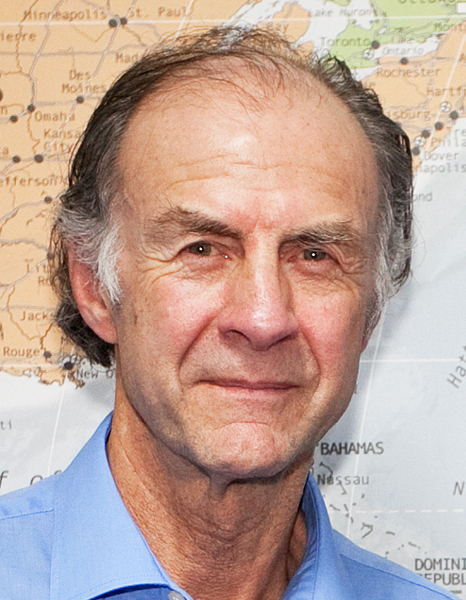


The second wife of Col. John Edward Broadbent (1845-1931) was the Honourable Alexandra (Alex) Caroline Frances Twisleton-Wykeham-Fiennes (1862-1938) . She was the Great Aunt of the famous explorer Ranulph Fiennes, as follows:
- Honourable Alexandra (Alex) Caroline Frances Twisleton-Wykeham-Fiennes (1862-1938), elder sister of
- Lt.Col. Sir Eustace Edward Twisleton-Wykeham-Fiennes, 1st Baronet (1864-1943) , father of
- Lt. Col. Sir Ranulph Twisleton-Wykeham-Fiennes, 2nd Baronet (1902-1943), father of
- Ranulph Fiennes (b.1944; a.k.a. Sir Ranulph Twisleton-Wykeham-Fiennes, 3rd Baronet).
Her first cousin Alberic (son of her father's younger brother Wingfield) was the great grandfather of the actors Ralph Fiennes and Joseph Fiennes, as follows:
- Alberic Arthur Twisleton-Wykeham-Fiennes (1865-1919) , father of
- industrialist Sir Maurice Fiennes (1907-1944), father of
- photographer Mark Fiennes (1933-1994), father of
- the actors Ralph Fiennes and Joseph Fiennes.
Famous family members
Some members of the family have been moderately famous in their own right:
Bernard Barton the Quaker poet (1784-1849) was a fairly popular poet in his day.
Charlotte Elliott (1789-1871) wrote several hymns, including the well known "Just As I Am". As such she is the only member of the family to have written material for Johnny Cash.
Sir William Henry Broadbent (1835-1907) was a physician who saved the life of the future George V, and was subsequently the target of attempted extortion by the Lambeth Poisoner (who was supposed to have owned up to being Jack the Ripper on his deathbed, according to his cellmate).
Lord Francis Wallace Grenfell (1840-1925) was a successful military commander and also the Governor of Malta from 1899-1903.
Major-General Sir Edward Broadbent (1875-1944) was Lieutenant Governor of Guernsey from 1934-1939.
Sir Claude Aurelius Elliott (1888-1973) was headmaster of Eton during the Second World War.